

The Living Pharmacy Blueprint (Part 2): How to Build the First Generation of Gut-Based Living Pharmacies
Forget hacking human DNA—it's time to program the microbiome. A deep dive into stable chassis organisms, bio-containment gates, and the upcoming decade of live biotherapeutics.

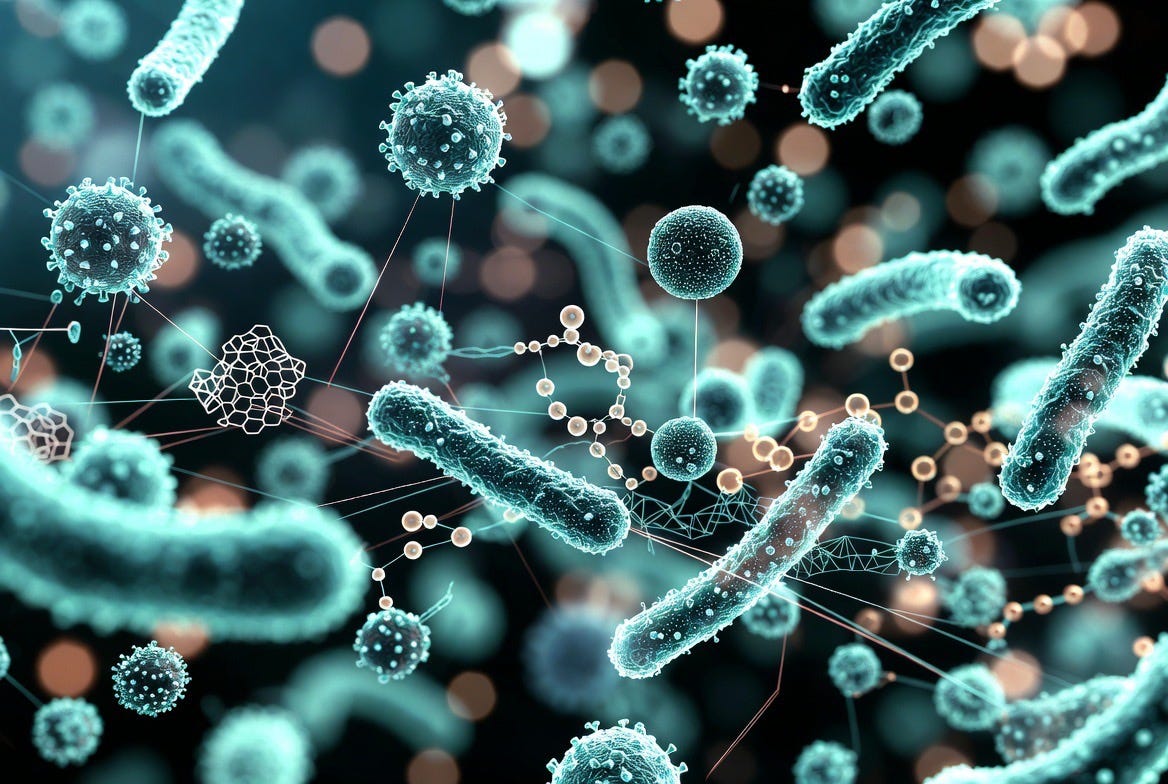
While teams at Altos Labs and Retro Biosciences are burning through billions of dollars trying to rewrite the epigenetic code inside our own cells, synthetic biology is quietly building much simpler, safer, and more elegant "living devices." These micro-machines are designed to work right inside us, delivering powerful therapeutic benefits without ever touching the host genome or risking oncogenesis.
In Part 1, we established why engineering the microbiome provides a massive, high-leverage shortcut for extending healthspan compared to direct intracellular intervention. Now, let’s get into the engineering blueprint: how exactly do we design and deploy this system using the scientific tools available to us today?
The Building Blocks Already Exist in the Lab
Engineering bacteria to synthesize targeted metabolites isn't science fiction—it is a rigorous, established biotechnological reality. All the necessary pieces of this puzzle have already been validated by scientists in isolated projects:
The Vitamin K2 Case (Menaquinone-7 / MK-7):
Strains of Lactococcus lactis, traditionally used in cheesemaking, have already been successfully engineered using metabolic design to dramatically boost menaquinone yields. By integrating strong promoters and overexpressing key genes in the mevalonate (MVA) or methylerythritol phosphate (MEP) pathways, biotechnologists have managed to increase MK-7 production multi-fold.The Capsinoid Case:
Capsaicin and its non-pungent analogs (capsinoids, such as capsiate) are well-documented as potent modulators of inflammation, acting through TRPV1 receptors and the NF-kB signaling cascade. Science has already mapped the plant genes for capsaicin synthase (CS) responsible for this synthesis, and we have solid data on how these molecules favorably reshape the gut microbiota.
The bold, yet scientifically grounded leap is to integrate these independent modules. We can transplant the production of MK-7 and capsinoids directly into the human gut microbiome, turning it into an autonomous, bioregulated "living pharmacy" operating 24/7.
The Architecture of a First-Generation "Living Pharmacy"
Designing a viable therapeutic strain requires a strict shift away from transient (temporary) bacteria and toward stable colonizers. Instead of standard L. lactis, which washes out of the GI tract within days, our target chassis must be a GRAS-status (Generally Recognized as Safe) microorganism capable of long-term integration. Top candidates include the clinically approved strain Escherichia coli Nissle 1917 (EcN) or the dominant human gut resident Bacteroides thetaiotaomicron.
The genetic circuit for this device consists of three autonomous operational modules:
1. Targeted MK-7 Export Module
Synthesizing long-chain menaquinone-7 comes with a major bottleneck: getting it out through the bacterium's hydrophobic membrane. The architecture must include:
Up-regulation of the key genes fueling the isoprenoid pool and the menaquinone methyltransferase (
menG) gene.Co-expression of specific efflux pumps (transporters) that actively flush MK-7 out into the gut lumen. This ensures systemic absorption by the host, activating matrix Gla-protein (MGP) and osteocalcin to halt vascular calcification.
2. Metabolic Anti-Inflammation Module
Local capsiate synthesis is achieved via a gene cassette encoding enzymes from the phenylpropanoid pathway. The bacteria utilize endogenous gut substrates (vanillyl alcohol and branched-chain fatty acids) to assemble the capsinoids. The result is a steady, gentle stimulation of intestinal TRPV1 receptors, triggering a systemic anti-inflammatory effect without causing any gastric irritation or burning.
3. Logic Gates and Biosecurity (Containment)
A living pharmacy cannot run "blind"—constant overproduction would eventually desensitize host receptors and metabolically exhaust the bacterial strain itself.
Condition-Dependent Promoters: The expression of MK-7 and capsiate genes is placed under the control of smart promoters that respond to biomarkers of inflammation (such as the
P_PmrBpromoter, which reacts to oxidative stress, or promoters triggered by nitrates). If there is inflammation in the gut, the pharmacy boots up. Once the inflammation subsides, the system goes into standby mode.Synthetic Auxotrophy (Kill-Switch): Containment is guaranteed by making the strain genetically dependent on a non-natural amino acid (e.g., L-aminophenylalanine). The user takes this amino acid as a co-pill. If they stop taking the co-pill, the engineered strain is guaranteed to self-destruct within 24 hours, completely eliminating the need for heavy antibiotics and wiping out the risk of horizontal gene transfer to wild gut bacteria.
Why is This Concept Entirely Realistic?
Technically Feasible: Editing prokaryotic (bacterial) genomes using CRISPR-Cas or Lambda-red recombination is orders of magnitude easier, cheaper, and more precise than trying to perform in vivo gene therapy on human cells using viral vectors.
Controllable Safety: Unlike human genome integration, where a single off-target edit can trigger tumorigenesis, a "living pharmacy" can be instantly and cleanly purged from the body at any time.
Clear Regulatory Track: Regulatory bodies (like the FDA and EMA) already have an established framework for Live Biotherapeutic Products (LBPs). This approval pathway is significantly shorter and more transparent than the one for classical human gene therapy.
Scalable Economics: Manufacturing therapeutic strains using standard industrial fermentation (bioreactors) makes this solution affordable for billions of people, not just ultra-wealthy clients backing pre-IPO longevity startups.
A Realistic Roadmap: How This Actually Plays Out
Let’s take off the rose-colored glasses. The road from a fascinating blog concept to an actual bottle in your medicine cabinet is brutal. Quite recently, the Live Biotherapeutic industry took a massive hit: several high-profile pioneers (including industry leader Synlogic) shut down after their engineered strains failed to show enough efficacy in late-stage trials. Bacteria living in a pristine petri dish behave completely differently than bacteria trying to survive the fierce, competitive jungle of a real human gut.
However, given the current velocity of biotech, a grounded and realistic timeline for this technology looks like this:
Phase 1: The Laboratory Crash Test (Next 2–3 Years)
The real scientific battle won't be about synthesizing Vitamin K2 or capsiate—it will be about evolutionary stability. Bacteria are inherently selfish. Forcing them to expend energy making compounds for our benefit lowers their evolutionary fitness. They will mutate and try to "spit out" or silence our engineered cassettes. Scientists will have to design the circuits so that the target genes are hardwired into vital survival functions of the cell—meaning if the bacteria drop the therapy, they die. Parallel testing on mouse models will happen here.Phase 2: The Safety Audits (4–5 Year Horizon)
This is where the strain enters humans for the first time (Phase I Clinical Trials). The focus won't be on whether anyone's arteries are clearing up, but on how safely the bacteria behave in the human GI tract. Researchers will monitor whether they trigger an immune backlash, if they accidentally share genes with native gut strains, and how reliably our "kill-switch" purges the system once the co-pill is withheld.Phase 3: Hard Proof of Efficacy (7–9 Year Horizon)
The ultimate hurdle. Proving that a "living pharmacy" reverses vascular aging requires years of longitudinal data. Researchers will track long-term systemic inflammation markers (like high-sensitivity C-reactive protein) and use CT angiography on volunteers to definitively prove whether coronary artery calcification has ground to a halt compared to a control group.
The Bottom Line
Right now, this is a conceptual blueprint. But it is a blueprint built on existing engineering tools, not sci-fi hand-waving.
The future of preventive medicine might turn out to be much closer to traditional brewing and fermentation than to the incredibly complex, wildly expensive rewriting of human DNA. Instead of spending billions trying to hack our own genetic code, humanity might take the path of least resistance: hosting a population of smart, programmed microscopic assistants that quietly do the heavy lifting while we sleep.
If these ideas resonated with you, consider supporting my research. You can buy me a coffee to fuel the next deep dive.
Not ready for coffee? Just leave a Like below to help spread the word!